We Take Medicaid/Medicare

What Are Snap-In Implant Dentures?
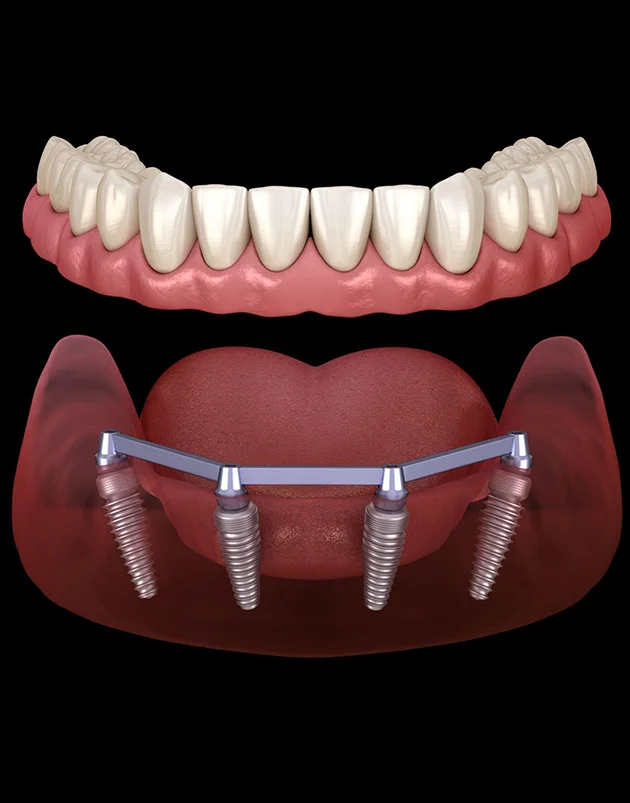
Snap-In Implant Dentures are a specialized type of denture designed to securely attach to dental implants placed by your dentist.
Here’s how anchoring your dentures with dental implants enhances your experience:
Enjoy More of Your Favorite Foods: With the added stability from dental implants, you can chew with greater power and confidence, making it easier to enjoy a variety of foods.
Non-Removable: Unlike traditional dentures, snap-in dentures stay firmly in place and do not need to be removed for cleaning or while eating.
Smile and Laugh with Confidence: The secure fit eliminates the worry of dentures slipping or falling out, allowing you to smile and laugh freely.
Increased Comfort: The fixed nature of snap-in dentures reduces movement, minimizing rubbing and chafing for a more comfortable fit.
Better Nutrition: Improved chewing ability helps you process food more effectively, leading to better overall nutrition.
Requires Less Bone: Ideal for individuals with limited bone density, as snap-in dentures need less bone to be securely anchored.
Reduce Bone Loss: Dental implants stimulate the jawbone, encouraging bone production and helping to counteract bone loss often experienced after tooth extraction.
Reduce or Eliminate Gagging: For some patients, removing a portion of the palate can expose the roof of the mouth, which can reduce or eliminate gag reflexes associated with traditional dentures.
Enhanced Comfort: The stability provided by implants helps to prevent irritation caused by denture movement.
Taste Your Food Better: Some patients can have part of the upper denture’s palate removed, which can improve taste sensations.
Snap-In Implant Dentures offer a secure, comfortable, and functional solution for replacing missing teeth, helping you enjoy a more natural eating and speaking experience.
Snap-In Implant Dentures vs. Traditional Dentures
While traditional dentures offer an affordable solution for replacing missing or damaged teeth, they often fall short in terms of function, stability, and chewing efficiency.
Shortcomings of Traditional Dentures:
Limited Chewing Power: Traditional dentures provide only 10-20% of the chewing power compared to natural teeth. The movement of the lower denture is continually influenced by the tongue and cheeks, leading to instability.
Speech Challenges: Speaking can be difficult with traditional dentures due to their movement, which can affect clarity and confidence.
Embarrassment: Fear of dentures becoming loose or falling out can lead to discomfort in social situations, making it challenging to eat, laugh, or converse with ease.
Discomfort: Traditional dentures, particularly lower ones, can move around, leading to irritation and chafing of the gums.
Poor Nutrition: Reduced chewing power may limit your ability to eat a balanced diet and chew food adequately for proper digestion.
Bone Loss: After tooth removal, bone loss is common and can continue over time, making traditional dentures increasingly difficult to wear and maintain.
Gagging: Traditional upper dentures often cover the roof of the mouth to provide suction and stability. This coverage can cause gagging for some people. Trimming the denture to reduce gagging can compromise its stability and suction.
Advantages of Snap-In Implant Dentures:
Snap-In Implant Dentures significantly address these issues by offering enhanced stability, improved chewing power, and greater comfort, providing a more reliable and natural solution for missing teeth.

Am I a Candidate?
Most patients are eligible for snap-in implant dentures! To determine if you’re a suitable candidate, we recommend scheduling a brief consultation. During this visit, we’ll:
Take a 3-Dimensional Scan: We will perform a detailed scan of your jawbone to assess your bone structure and density.
Conduct an Oral Examination: Our dentist will thoroughly examine your mouth to evaluate your oral health.
Review Your Medical History: We’ll discuss your medical history to ensure that implant dentures are a safe and appropriate option for you.
How Many Implants Will I Need?
Upper Denture: Typically requires at least 4 implants to provide adequate support and stability.
Lower Denture: Generally requires a minimum of 2 implants, though 3 or 4 implants are often recommended for enhanced retention and stability.
If you’re considering snap-in implant dentures, our team will guide you through the process and help determine the best approach for your needs.
Comparing Snap-In Implant Dentures and Traditional Dentures

Snap-In Implant Dentures Procedure Timeline
The entire process generally spans approximately 6 months from beginning to end.
1
Procedure
Once any remaining teeth are extracted and any required oral surgeries are completed, the dental implants are placed into the jawbone. The implants are then left undisturbed for a minimum of 4 months to allow for osseointegration, during which the bone integrates with the implants. During this healing period, the implants are not visible.
2
Post-Op Care
We’ll schedule a follow-up appointment for the day after your procedure. During this visit, we’ll:
- Evaluate Your Mouth: Check the healing progress and overall condition.
- Ensure Comfort: Make sure any dentures are fitting as comfortably as possible.
- Answer Your Questions: Address any concerns or queries you may have.
This appointment helps ensure a smooth recovery and optimal fit for your dentures.
3
Soft Liners / Soft Re-Fittings
Soft liners are cushioning materials added to your denture during the healing process. They fill the gaps between your gums and dentures that develop as you heal, providing additional comfort. By offering a cushioned fit, soft liners help your dentures feel more comfortable and enhance their overall fit.
4
Uncovery
Uncovery is a minor surgical procedure where we expose the implants and place small healing abutments on top of them. This step is essential for shaping your gum tissue and preparing it for the final placement of your snap-in dentures.
5
Attachment of Implants to Dentures
During this step, we replace your healing abutments with denture abutments and secure your dentures to the implants. This process is typically completed in a single day, though it may occasionally take a bit longer.
frequently asked questions
An upper implant denture requires at least 4 implants. A lower implant denture requires at least 2 implants. The more implants you have, the more stable your denture will generally be. This is especially true with the lower denture. Three or 4 implants in the lower is usually much better than 2.